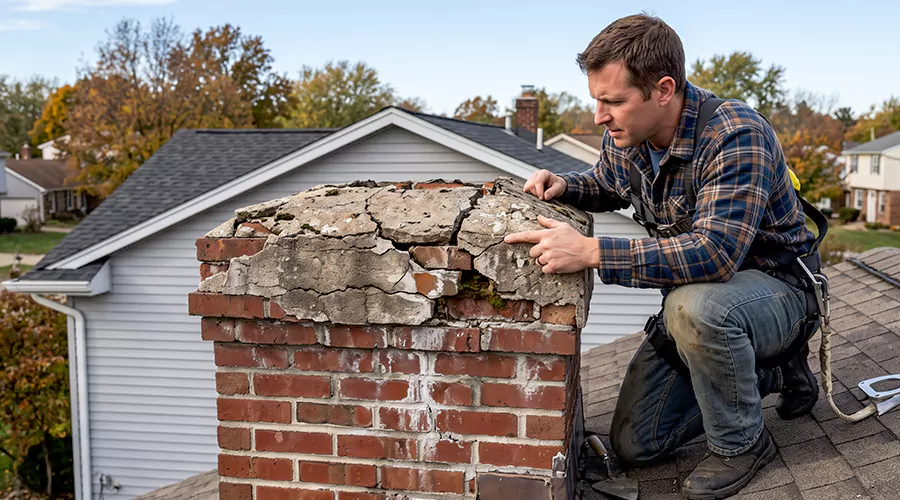
What Causes Chimney Crown Damage?
Identify what causes chimney crown damage, including moisture, freeze-thaw cycles, cracks, poor construction, weather exposure, and aging materials.




Based on 500+ Reviews

Proudly American
Owned & Operated

A chimney crown plays an important role in protecting a masonry chimney from water damage. Located at the top of the chimney, the crown is designed to direct rainwater away from the chimney walls and prevent moisture from entering the brick and mortar structure.
Over time, chimney crowns can develop cracks, surface deterioration, or structural damage due to weather exposure, moisture, poor construction, and aging. Once a chimney crown begins to fail, water can enter the chimney system and cause damage to bricks, mortar joints, and interior fireplace areas. Chimney flashing services can also help address other areas where water may enter around the chimney and roof.
Understanding what causes chimney crown damage can help homeowners identify problems early and protect their chimney from costly repairs.
A chimney crown is the protective masonry or concrete surface located at the top of a masonry chimney. It covers the chimney opening area and extends beyond the chimney walls to help move water away from the structure.
A properly built chimney crown should:
The crown works together with other chimney components, including the chimney cap and flashing, to provide moisture protection.
The main purpose of a chimney crown is to protect the chimney structure from water exposure.
A functioning chimney crown helps prevent:
Without proper protection, water can enter small cracks and gradually weaken the chimney structure.
Several factors can cause chimney crowns to crack or deteriorate.
The most common causes include:
Freeze and thaw cycles are one of the most common causes of chimney crown damage.
The process occurs when:
Repeated freezing and thawing can cause:
This type of damage is especially common in areas with seasonal temperature changes.
Constant exposure to rain, snow, and humidity can gradually damage a chimney crown.
Water can weaken the crown when:
Once moisture enters the crown, it can expand cracks and allow water to reach the chimney masonry below.
A poorly constructed chimney crown may fail much sooner than expected.
Common construction problems include:
A chimney crown should be designed to move water away from the chimney rather than allowing water to collect on top.
A chimney crown should extend beyond the edges of the chimney walls.
This overhang helps prevent water from running directly down the sides of the chimney.
When a crown does not have enough overhang:
Poor water drainage can significantly shorten the life of chimney masonry.
Chimney crowns are exposed to constant temperature changes throughout the year.
During temperature changes:
Repeated expansion and contraction can create stress within the crown.
Over time, this stress may cause:
Previous repairs can sometimes contribute to chimney crown problems.
Using unsuitable materials may cause:
Chimney crown repairs should use materials designed for outdoor masonry exposure.
Like any exterior building component, chimney crowns wear down over time.
Years of exposure to:
can gradually weaken the crown.
Older crowns are more likely to develop:
Regular inspections help identify aging problems before they become severe.
Severe weather can accelerate chimney crown damage.
Heavy rain can expose weak areas, while storms may contribute to:
Strong winds and hail can also damage chimney components.
After major storms, inspecting the chimney can help identify new problems.
A chimney crown should allow water to flow away easily.
Drainage problems can occur because of:
Standing water increases moisture exposure and can speed up deterioration.
A lack of regular chimney maintenance can allow small crown problems to become major damage.
Without inspections, homeowners may miss:
Regular chimney inspections help identify crown issues before they affect the rest of the chimney.
A damaged chimney crown may show several warning signs.
Common signs include:
| Sign | Possible Problem |
|---|---|
| Visible cracks | Crown deterioration |
| Crumbling edges | Surface damage |
| Water inside fireplace | Moisture entry |
| White stains on bricks | Water movement |
| Damaged mortar joints | Moisture exposure |
| Loose concrete pieces | Crown failure |
If these signs appear, the chimney should be inspected.
A damaged chimney crown can allow water to enter the chimney structure.
Possible consequences include:
The longer moisture remains untreated, the greater the chance of expensive repairs.
The repair method depends on the severity of the damage.
| Damage Level | Repair Method |
|---|---|
| Small cracks | Crown crack sealing |
| Surface damage | Crown resurfacing |
| Moderate deterioration | Partial repair |
| Severe damage | Crown replacement |
A chimney inspection can determine whether repair or replacement is needed.
Preventive maintenance can help extend the life of a chimney crown.
Helpful steps include:
Preventing moisture entry is one of the most effective ways to protect a chimney crown.
Some minor repairs may appear simple, but chimney crown repair requires proper materials and techniques.
DIY challenges include:
Professional evaluation may be recommended when:
The cost depends on:
Common repair options include:
Repairing crown problems early is usually less expensive than repairing water damage caused by a failed crown.
Chimney crown damage is commonly caused by moisture exposure, freeze and thaw cycles, poor construction, temperature changes, aging, and lack of maintenance. Because the chimney crown protects the entire chimney structure from water intrusion, even small cracks should be addressed before they allow moisture to damage bricks and mortar. Regular inspections, proper repairs, and good moisture protection can help extend the life of a chimney crown and prevent expensive masonry problems.
Moisture exposure and freeze-thaw cycles are among the most common causes of chimney crown damage.
Yes. Cracks can allow water to enter the chimney structure and damage masonry.
The lifespan depends on construction quality, materials, weather exposure, and maintenance.
Yes. Small cracks can often be repaired, while severely damaged crowns may require replacement.
Regular inspections, proper drainage, timely repairs, and moisture protection help prevent crown damage.
Yes. Delaying repairs can allow water to cause more extensive chimney damage.
Identify what causes chimney crown damage, including moisture, freeze-thaw cycles, cracks, poor construction, weather exposure, and aging materials.
